Abstract: This study was conducted to investigate the effects of yeast hydrolysate (Gropro) on in vitro ruminal fermentation characteristics and ruminal effective degradability of feed nutrients in ruminants, as well as its production performance-improving effects on heat-stressed peak-lactation dairy cows. In the in vitro fermentation test, substrates were supplemented with 0% (control) or 1% Gropro, and cumulative gas production and fermentation indicators were determined after 48 h of in vitro incubation. Three mature fistulated mutton sheep were used for the in situ nylon bag trial to measure dynamic ruminal degradability and degradation kinetic parameters of dietary dry matter (DM) and crude protein (CP) under two treatments. The large herd feeding test adopted 40 Holstein cows at peak lactation subjected to persistent heat stress (temperature-humidity index >72) and lasted 42 days (14 d adaptation + 28 d sampling period); cows were fed a basal diet with or without 100 g/d Gropro per head.
In vitro results showed that cumulative gas production did not differ significantly between groups within the initial 6 h of incubation (P>0.05). After 9 h of fermentation, Gropro remarkably boosted gas production, with the total 48 h gas production rising by 6.88% (P<0.05). Supplemental Gropro significantly increased ruminal fluid pH, total volatile fatty acids (TVFA, +11.1%) and propionate concentration (+20.6%), and lowered the acetate-to-propionate (A:P) ratio by 11.8% (P<0.05), whereas in vitro dry matter digestibility (IVDMD), acetate content remained unchanged (P>0.05).
In situ nylon bag results indicated that the 4 h DM ruminal degradability of the Gropro group was 6.86% higher than that of the control (P<0.05), accompanied by significant improvements in DM rapidly degradable fraction (a), potential degradability (a+b) and effective degradability (ED). For crude protein, real-time degradability at 2, 4, 8 and 12 h increased by 16.8%, 9.7%, 8.6% and 8.0%, respectively (P<0.05). The CP a value and ED rose significantly by 21.1% and 8.2% (P<0.05); the slowly degradable fraction (b) showed an upward trend (+20.1%, P=0.087), while the degradation rate constant (c) decreased significantly (P<0.05).
Results of large-scale feeding trials on peak-lactation dairy cows revealed that Gropro supplementation reduced cows’ respiratory rate and rectal temperature under heat stress (P<0.05), significantly elevated milk yield, 4% fat-corrected milk yield, milk fat yield and feed efficiency (P<0.05), and exerted no adverse influence on dry matter intake (P>0.05).
In conclusion, dietary supplementation with Gropro yeast hydrolysate enhances in vitro ruminal gas production, optimizes volatile fatty acid composition and fermentation balance to stabilize ruminal pH and protect rumen health. Meanwhile, yeast hydrolysate significantly elevates real-time ruminal degradability, effective degradability and degradation kinetics of dietary DM and CP, and further improves lactation performance of dairy cows under heat stress.
Keywords: Yeast hydrolysate; in vitro rumen fermentation; ruminal nylon bag technique; effective degradability; dariy cows.
1. What Is Yeast Hydrolysate?
Yeast hydrolysate (Gropro) is a high-quality single-cell protein raw material produced by liquid fermentation of Saccharomyces cerevisiae. The yeast biomass undergoes autolysis or exogenous enzymatic hydrolysis, followed by concentration or drying. No yeast soluble fractions are extracted during processing, and its crude protein content is no less than 35% as specified in the 2013 Catalogue of Feed Raw Materials. Rich in functional ingredients including small peptides, mannan, β-glucan, nucleic acids and vitamins, yeast hydrolysate exerts beneficial effects on animal intestinal health, immune response and growth performance.
Typical Nutritional Specifications of Yeast Hydrolysate
• Moisture ≤8.0%
• Crude ash ≤10.0%
• Mannan ≥5.0%
• Amino nitrogen ≥1.0%
• Nucleic acid ≥6.0%
• Crude protein ≥40.0%
2. Research Progress of Yeast Hydrolysate in Animal Production
Dietary supplementation with yeast hydrolysate effectively improves antioxidant capacity and stress resistance, and accelerates small intestinal villus development in weaned piglets (Li et al., 2023). A 2% dietary inclusion of yeast hydrolysate markedly enhances digestion and growth performance, elevates muscular crude protein and ether extract contents, and strengthens antioxidant and non-specific immune functions in Procambarus clarkii (Li et al., 2024). Supplementing broiler diets with yeast hydrolysate improves growth performance and antioxidant status (Wang, 2022). Its beneficial effects in calves have also been validated: supplementation at 5 g/(head·d) improves calf mental state, hair coat condition, faecal scores and serum biochemical indices, enriches beneficial intestinal microflora and promotes healthy growth (Li et al., 2024). Adding 0.2% yeast hydrolysate to calf starter feed alleviates weaning stress, boosts innate immunity and drastically reduces diarrhoea incidence (Kim et al., 2020).
However, few studies have explored the application of yeast hydrolysate in adult ruminants due to the presence of complex ruminal microbiota. This study aimed to evaluate the impacts of yeast hydrolysate on in vitro rumen fermentation profiles and ruminal effective degradability of feed nutrients, so as to provide theoretical support for its rational utilisation in adult ruminants.
3. In Vitro Rumen Fermentation Trial
Before morning feeding, ruminal fluid was collected from healthy fistulated ruminants, filtered through four layers of gauze and mixed evenly in equal volumes. The fluid was diluted with artificial saliva buffer at a ratio of 1:2 to prepare in vitro rumen culture medium. A total of 300 mg fermentation substrate and corresponding doses of yeast hydrolysate were weighed into anaerobic fermentation bottles, each supplemented with 50 mL culture medium. Bottles were flushed with CO₂ for 3–5 s to eliminate air and tightly sealed. All bottles were incubated at 39 °C on a shaking incubator at 120 rpm for 48 h. Cumulative gas production was recorded at 0, 2, 4, 6, 9, 12, 24, 36 and 48 h post-incubation. Upon termination of fermentation, the contents of each bottle were collected and filtered through a 300-mesh nylon bag. Filtrate pH was measured immediately, and five 2 mL aliquots of filtrate were stored at −20 °C for subsequent analysis.
3.1 Effects of Yeast Hydrolysate on In Vitro Cumulative Gas Production
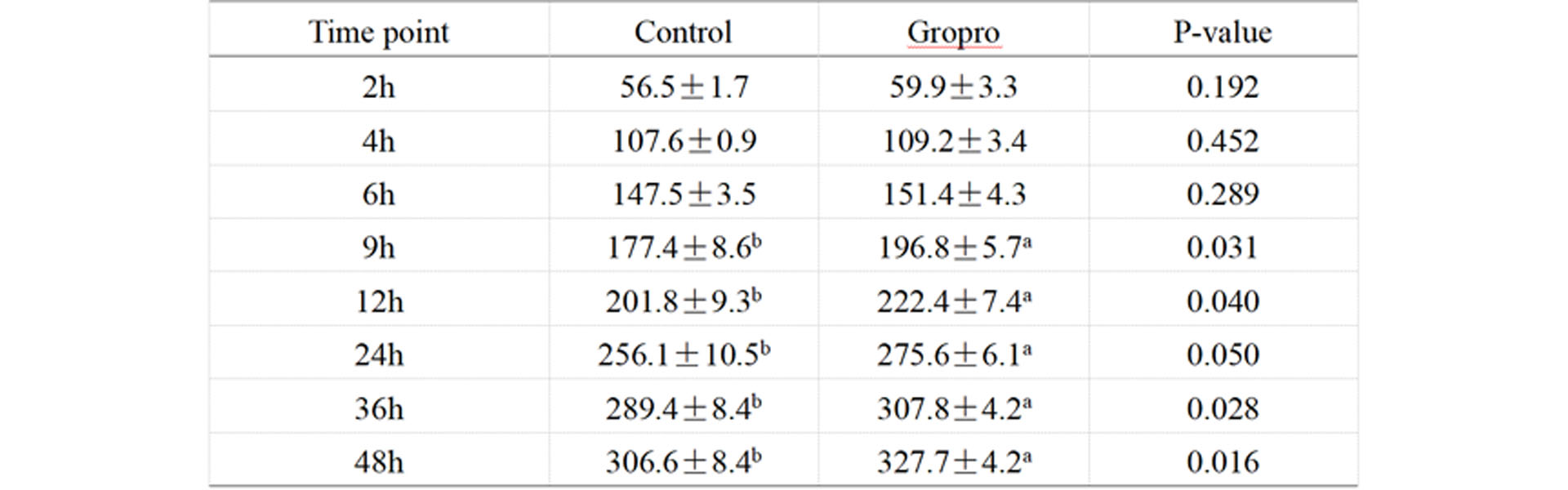
As shown in Table 1, cumulative gas production showed no significant differences between treatments within the first 6 h of incubation (P>0.05). After 9 h, yeast hydrolysate supplementation significantly elevated gas production (P<0.05). Compared with the control group, the Gropro treatment increased total 48 h gas production by 6.88% (P<0.05).
Table 1 Effects of yeast hydrolysate on in vitro cumulative gas production (mL/g substrate)
3.2 Effects of Yeast Hydrolysate on Rumen Fermentation Profiles
Table 2 indicates that yeast hydrolysate had no significant influence on in vitro dry matter digestibility (IVDMD), acetate concentration (P>0.05). Nevertheless, supplementation significantly raised ruminal fluid pH, total volatile fatty acid (TVFA), propionate and butyrate concentrations, and lowered the acetate-to-propionate (A:P) ratio. Specifically, TVFA increased by 11.1%, propionate rose by 20.6%, and the A:P ratio declined by 11.8% (all P<0.05).
Table 2 Effects of yeast hydrolysate on rumen fermentation characteristics
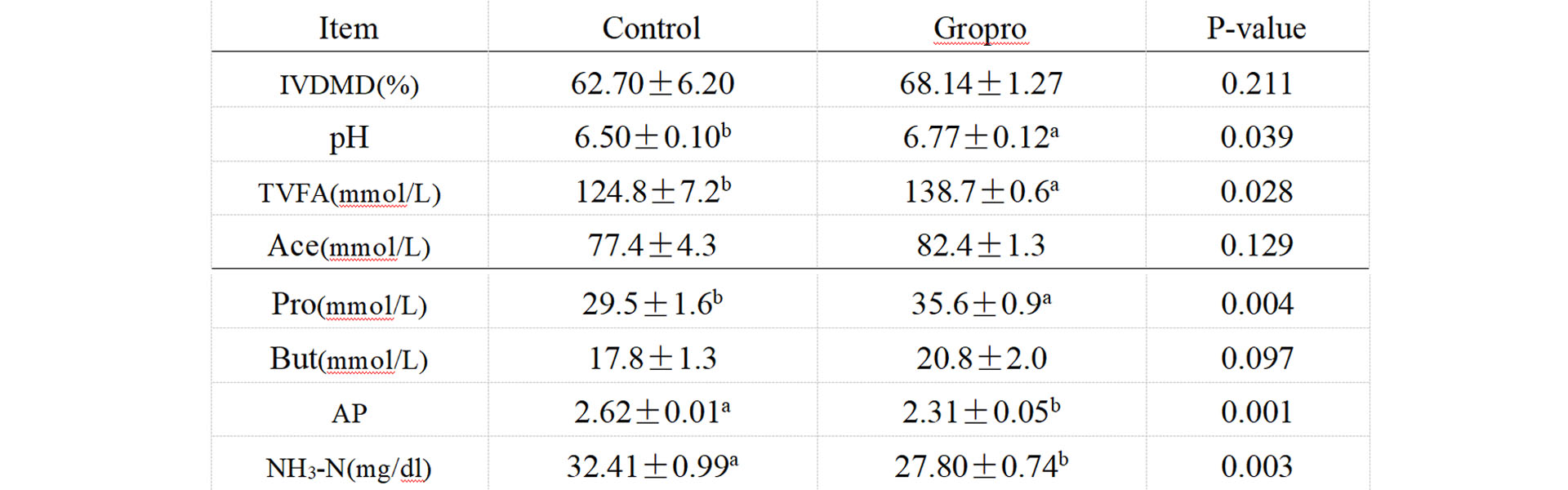
Note: Values within the same row with different lowercase superscripts differ significantly (P<0.05).Abbreviations: IVDMD = in vitro dry matter digestibility; NH₃-N = ammonia nitrogen; TVFA = total volatile fatty acids; A:P = acetate-to-propionate ratio.
4. In Situ Nylon Bag Degradation Trial
Three healthy mature male mutton sheep fitted with permanent ruminal fistulas were quarantined and raised in individual pens. Nylon bags with pore size 40–60 μm and dimensions 10 cm × 6 cm were adopted. The total mixed ration (TMR, forage-to-concentrate ratio = 3:7) was ground and sieved through a 10-mesh screen, oven-dried at 65 °C for 48 h and equilibrated to ambient moisture. Exactly 3 g TMR sample was weighed into each bag; the treatment group received yeast hydrolysate supplementation at 5% of TMR (0.15 g per bag).
Ruminal degradability was determined at seven incubation time points: 0, 2, 4, 8, 12, 24 and 48 h, with two analytical replicates per time point and three sheep as biological replicates. Bags were secured in pairs with rubber bands to prevent detachment and inserted into the rumen via fistulas prior to morning feeding following the “sequential insertion, simultaneous removal” protocol. After retrieval, bags were immediately rinsed with cold water to terminate microbial activity (0 h samples were processed together). Continuous gentle rinsing was performed for 40–50 min until the rinse water turned clear. Cleaned bags were oven-dried at 65 °C for 72 h to constant weight, weighed and sealed in zip-lock bags for storage (Li et al., 2023; Zhang & Li, 2024).
4.1 Effects of Yeast Hydrolysate on Real-Time Ruminal Dry Matter Degradability and Degradation Parameters
As summarised in Table 3, the Gropro group exhibited a significant 6.86% increase in 4 h ruminal dry matter degradability compared with the control (P<0.05). Numerically higher degradability was observed at 2 h (+11.1%, P=0.077) and 48 h (+4.08%, P=0.099), though differences were not statistically significant.
Table 3 Effects of Gropro on real-time ruminal dry matter degradability (%)
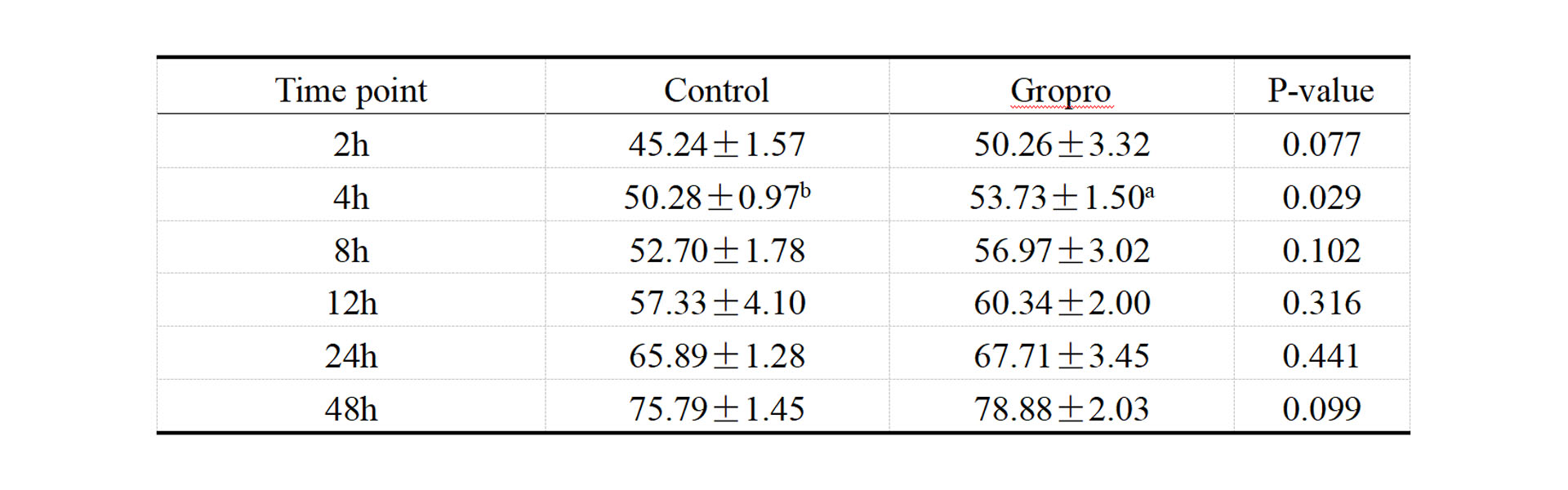
Note: Values within the same row with different lowercase superscripts differ significantly (P<0.05).
Fitting of the Ørskov degradation model (Table 4) revealed that the rapidly degradable fraction (a), potential degradability (a+b) and effective degradability (ED) of dry matter were significantly elevated by 16.5%, 13.4% and 5.8% in the Gropro group (P<0.05). The slowly degradable fraction (b) tended to increase by 9.9% (P=0.075), while the degradation rate constant of fraction c showed a marginal decreasing trend (P=0.099).
Table 4 Effects of Gropro on ruminal dry matter degradation parameters
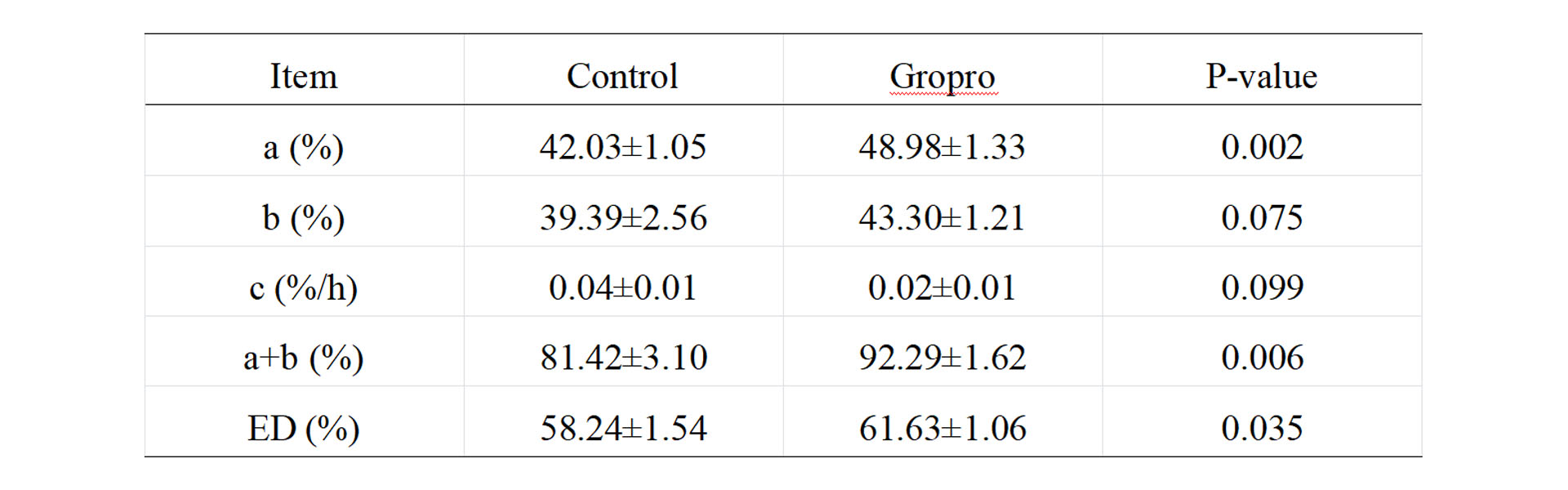
Note: Values within the same row with different lowercase superscripts differ significantly (P<0.05).
4.2 Effects of Yeast Hydrolysate on Real-Time Ruminal Crude Protein Degradability and Degradation Parameters
Table 5 shows that real-time crude protein (CP) degradability at 2, 4, 8 and 12 h was significantly improved by 16.8%, 9.7%, 8.6% and 8.0% in the Gropro treatment relative to the control (P<0.05). Numerically greater CP degradability was detected at 24 h (+5.5%, P=0.052) and 48 h (+2.8%, P=0.077) without statistical significance.
Model fitting indicated that the rapidly degradable fraction a and effective degradability ED of CP increased significantly by 21.1% and 8.2% in the Gropro group (P<0.05). The slowly degradable fraction b tended to rise by 20.1% (P=0.087), whereas the degradation rate constant c decreased significantly (P<0.05).
Table 5 Effects of Gropro on real-time ruminal crude protein degradability and degradation parameters
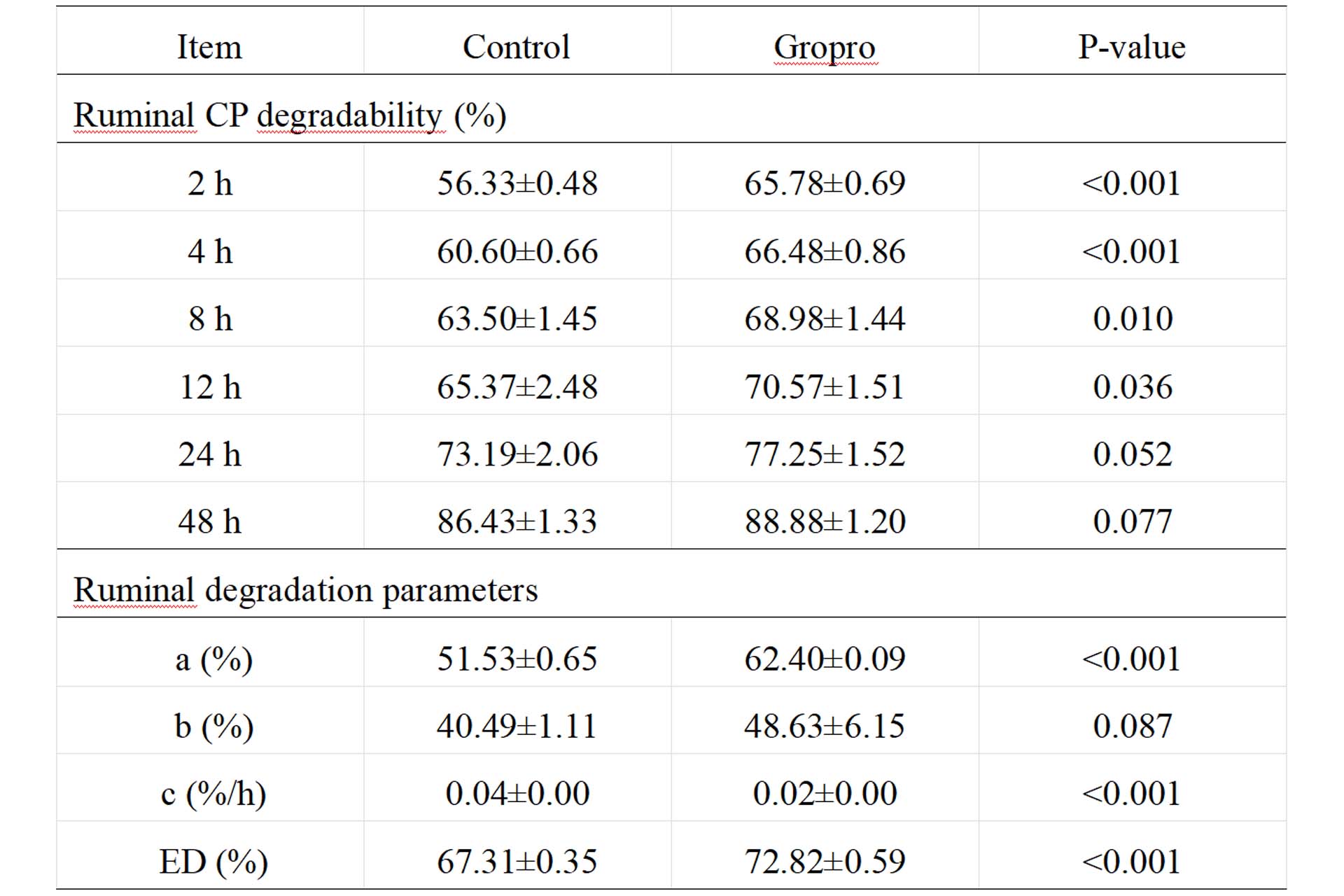
Note: a=rapidly degradable fraction; b=slowly degradable fraction; c=degradation rate of fraction; ED=effective degradability.
5. Effects of Yeast Hydrolysate on Lactation performance and milk composition in cows
A total of 40 healthy Holstein cows in peak lactation, with similar days in lactation (60±10 d), parity (2) and milk yield (46±5 kg/d), were randomly assigned to 2 treatments (n = 20): 1) a basal diet without yeast hydrolysate supplementation (CON) and, 2) the basal diet supplemented with 100 g/d per cow of yeast hydrolysate (Gropro). The hydrolysate was thoroughly mixed into the total mixed ration before feeding. The Gropro product was derived from yeast hydrolysate, provided by Angel Yeast Co., Ltd. The experiment lasted for 42 d, including 14 days for acclimation, followed by 28 days of measurement. Cows were housed in a freestall barn and had free access to feed and water throughout the experiment. The total mixed ration was offered twice daily at 10:40 and 18:40 h and cows were milked 3 times daily at 06:00, 14:00 and 23:00 h.
Compared with the CON group, Gropro supplementation did not affect DMI (P = 0.558), lactose percentage (P = 0.443), lactose yield (P = 0.507), non-fat solids (P = 0.993), or SCC (P = 0.985), but increased milk yield (P < 0.001), 4% FCM yield (P = 0.024), milk fat percentage (P = 0.047), milk fat yield (P = 0.029), and feed efficiency (P = 0.035). In addition, Gropro supplementation decreased MUN (P = 0.008), whereas total solids tended to increase (P = 0.075) (Table 8).
Table 6. Effects of yeast hydrolysate on production performance in peak-lactation dairy cows.
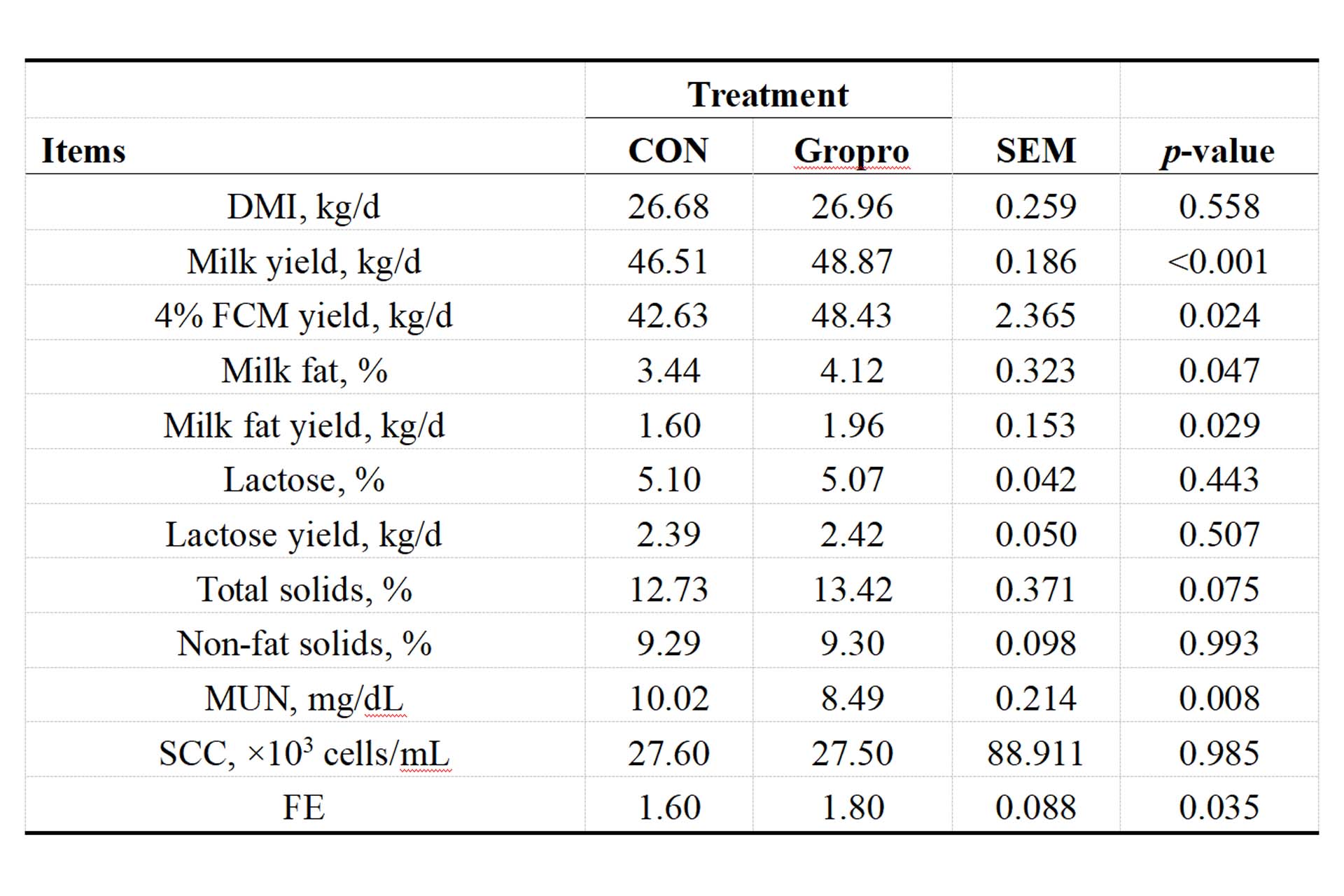
CON, basal diet; Gropro, basal diet supplemented with 100 g/cow per day of Gropro; DMI = dry matter intake; FCM = fat-corrected milk; MUN = milk urea nitrogen; SCC = somatic cell count; FE = feed efficiency. SEM = standard error of the mean.
6. Conclusions
Overall, adding yeast hydrolysate (Gropro) to ruminant diets can significantly increase cumulative gas production, total volatile fatty acid and propionate concentration in in vitro rumen fermentation, reduce the acetate-to-propionate ratio, optimize ruminal fermentation patterns and stabilize ruminal pH, thereby maintaining healthy rumen fermentation environment.
In addition, yeast hydrolysate markedly improves the real-time dynamic degradability, effective degradability and key degradation kinetic parameters of dietary dry matter and crude protein in the rumen, which helps promote the digestion and utilization of feed nutrients.
Under continuous heat stress conditions, supplementation with 100 g/d Gropro per cow can effectively relieve heat stress response of peak-lactation Holstein cows, raise milk yield, fat-corrected milk yield, milk fat output and feed conversion efficiency without reducing dry matter intake, presenting prominent application value in lactating dairy cow production.
About Angel Animal Nutrition
Angel Animal Nutrition focuses on providing professional yeast solutions for animal nutrition, caring for animal health, reducing antibiotic use, and promoting the sustainable development of the livestock industry. Together with our partners, we are always in action, working hand in hand to create a better future.
About Angel
Angel Yeast Company is a high-tech listed company specializing in yeast and biotech. Product business covers Yeast and Baking, Yeast Extract-Savoury, Nutrition & Health and Biotechnology fields. It is one of the world's leading companies in the yeast industry. Angel has 12 holding subsidiaries and provides products and services for more than 150 countries and regions.
Press Contact
ANGEL YEAST CO.,LTD
Address: 168 Chengdong Avenue, Yichang, Hubei 443003, P. R.China
Tel:+86-717-6369520, 6369558