As pet care grows increasingly refined, consumer demand for pet food has shifted from basic satiation to enjoyable eating. The rising use of plant protein as a substitute for animal protein in dry food cuts costs and diversifies raw material sources, but inevitably weakens meaty flavor and reduces palatability. Rebuilding satisfying flavor profiles in low-meat or meat-free formulas has become a core technical challenge for the pet food industry. Derived from the enzymolysis and autolysis of Saccharomyces cerevisiae, yeast nucleotides are rich in flavor-active nucleotides including 5'-inosinic acid (IMP) and 5'-guanylic acid (GMP), plus savory peptides. With natural origin and flavor-modifying properties, they offer a practical solution to this challenge.
1 Core Mechanisms of Palatability Enhancement
1.1 Umami Synergy for Amplified Savory Perception
Dogs and cats have specific nucleotide receptors on their taste buds. IMP and GMP create a 10–20-fold umami multiplicative effect when combined with free glutamic acid. While glutamic acid alone delivers only basic meaty notes, nucleotides activate secondary taste signaling pathways to prolong umami stimulation and build a rich, long-lasting meaty base flavor — all without the health risks of high sodium intake. Yeast hydrolysis also releases abundant savory peptides alongside nucleotides, forming a dual umami synergy that further deepens flavor complexity.
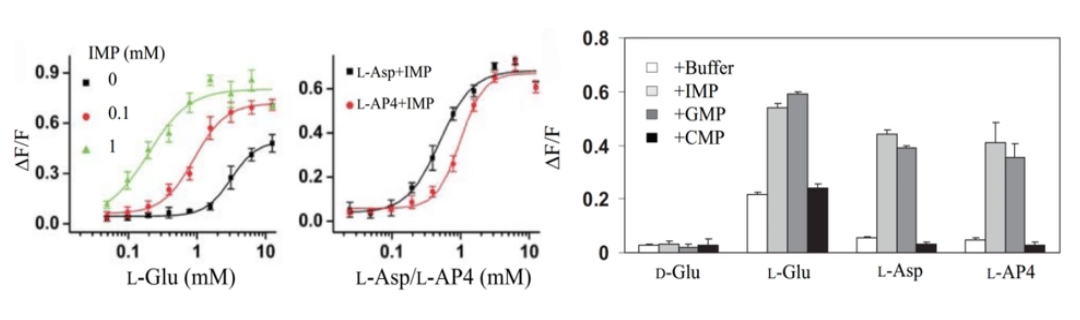
Figure 1 Schematic diagram of umami synergy pathway between nucleotides and glutamic acid
1.2 Dual Flavor Regulation for Off-Flavor Masking
As small water-soluble molecules, yeast nucleotides volatilize readily when sprayed onto dry food surfaces, releasing a robust cooked meat aroma. Cats possess roughly 100 million olfactory epithelial cells — far more than dogs — and can quickly detect furan and sulfur-containing flavor intermediates from nucleotide degradation, significantly boosting first-bite preference.
Functional dry foods often contain vitamin premixes, mineral complexes and plant extracts, which commonly carry metallic, bitter or herbal off-notes. The savory peptides and 5'-nucleotides in yeast extracts competitively bind to bitter taste receptor (Tas2Rs) active sites, reducing perceived bitterness intensity. Meanwhile, enhanced umami signals create a central "flavor masking" effect, which is particularly valuable for formulas high in fish oil (Omega-3 source) or plant protein.
1.3 Intestinal Regulation for Sustained Feeding Feedback
Nucleotides support intestinal villi repair and promote the growth of beneficial flora such as Lactobacillus and Bifidobacterium, improving diet digestibility. They also stimulate intestinal endocrine cells to secrete ghrelin, boosting appetite and reducing postprandial satiety signals. Better nutrient absorption creates positive metabolic feedback, lowering picky-eating recurrence with long-term use — a key advantage over chemical attractants that only provide short-term taste stimulation.
1.4 Thermal Stability for Extruded Food Processing
Yeast nucleotides offer better heat stability than hydrolyzed proteins. IMP and GMP typically remain stable above 180℃, so conventional extrusion causes minimal degradation and no flavor loss. Suitable for both internal incorporation and surface spraying, they work well with low-palatability formulas including grain-free, low-meat and veterinary diets.
Critically, yeast nucleotides participate in the intermediate stages of the Maillard reaction and Strecker degradation with free amino acids and reducing sugars at high temperatures, producing sulfur-containing heterocyclic compounds (thiazoles, thiophenes, etc.) that impart lasting meaty and roasted notes. This dual function — flavor generation during processing, taste delivery during feeding — makes yeast nucleotides far more effective than simple surface-applied flavorings.
2 Two-Bowl Feeding Trial: Palatability Comparison of Yeast Extracts
2.1 Trial Protocol
· Animals: 14 healthy adult domestic cats, evenly divided into two groups, single-caged with free access to water.
· Samples: 3 yeast extracts (A, B, C) with total nucleotide content ranging from 0.31% to 5.5%.
· Method: Industry-standard two-bowl palatability test, with 2 days of adaptation and 5 days of formal trial. Bowls are swapped daily to eliminate position bias, with pairwise comparisons within each group.
· Analysis: First-bite preference, average daily feed intake (ADFI) and overall feeding rate. Data processed via Minitab ANOVA, with P<0.05 defined as statistically significant.
2.2 Key Results
The three extracts show a clear palatability gradient, ranked by feeding performance: B>A>C. Group B (5.5% total nucleotides) achieved an ADFI of 45.53g, while Group C (basic yeast without deep nucleotide enzymolysis) reached only 30.90g — a feeding rate difference of over 23%, with statistically significant variance.
Conclusion: Within the test range, nucleotide content is positively correlated with feline palatability. Higher nucleotide levels correspond to stronger feeding preference, and basic yeast without nucleotide enrichment has the weakest attractant effect.
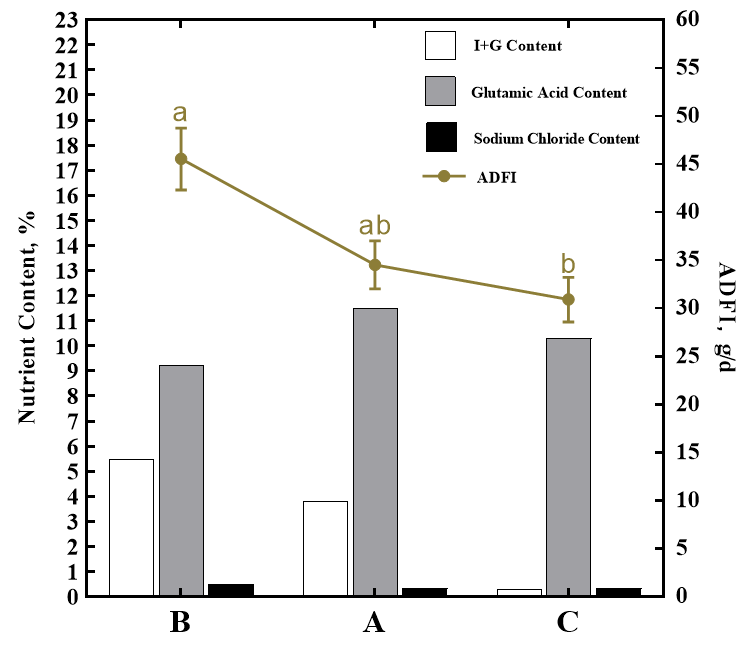
Figure 2 Correlation between ADFI and contents of nucleotides (I+G), glutamic acid and sodium chloride
2.3 Supplementary Observations
Throughout the trial, cats fed nucleotide-enriched yeast extracts (A/B) showed better stool consistency and higher nutrient digestibility than those on basic yeast (Group C), confirming yeast nucleotides deliver both flavor enhancement and intestinal health benefits.
3 Formulation Application Guidance
Trial results confirm that high-nucleotide yeast extracts deliver markedly superior palatability to standard yeast materials. Naturally low in sodium, all tested samples do not elevate formula sodium levels, making them suitable for full clean-label pet food ranges. With thermal stability matched to mainstream extrusion processes, they participate in Maillard reactions at high temperatures to generate roasted and meaty notes, delivering both in-process flavor formation and in-feeding taste release.
Application recommendations:
· High-nucleotide yeast extracts are preferred for grain-free high-plant-protein, low-meat veterinary, and high-fish-oil formulas with weak meat aroma and prominent off-flavors.
· Surface spraying dosage: 0.3%–0.6% for conventional extruded diets; increased to 0.6%–1.0% for functional diets with strong off-flavors.
About Angel Animal Nutrition
Angel Animal Nutrition focuses on providing professional yeast solutions for animal nutrition, caring for animal health, reducing antibiotic use, and promoting the sustainable development of the livestock industry. Together with our partners, we are always in action, working hand in hand to create a better future.
About Angel
Angel Yeast Company is a high-tech listed company specializing in yeast and biotech. Product business covers Yeast and Baking, Yeast Extract-Savoury, Nutrition & Health and Biotechnology fields. It is one of the world's leading companies in the yeast industry. Angel has 12 holding subsidiaries and provides products and services for more than 150 countries and regions.
Press Contact
ANGEL YEAST CO.,LTD
Address: 168 Chengdong Avenue, Yichang, Hubei 443003, P. R.China
Tel:+86-717-6369520, 6369558
Email: aie@angelyeast.com