-
Home > News & Events > Blog > Yeast Protein
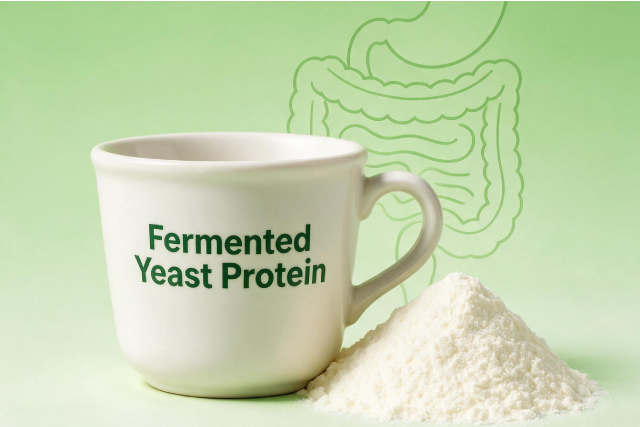
Yeast protein is rapidly gaining momentum. With its remarkable versatility—ranging from supporting GLP-1 diets and serving as a meal replacement base, to enhancing baked goods and empowering plant-based products—it has emerged as a highly sought-after ingredient for both food manufacturers and consumers.
However, with rising popularity come inevitable questions: Is it genetically modified? Is it high in purines? How bioavailable is it? Today, we address these pressing concerns to provide a comprehensive overview.
Q1: How is yeast protein manufactured? Crafted from Natural Saccharomyces cerevisiae
Yeast protein is derived from natural Saccharomyces cerevisiae (baker's/brewer's yeast). It is cultivated in sterile, closed fermentation tanks using molasses—a natural byproduct of sugarcane and sugar beet processing—as its nutrient base. This closed-loop fermentation process ensures zero contamination, strict process control, and a highly pure microbial culture. Simply put, yeast protein is a purposefully cultivated, premium edible protein.
Q2: Is it genetically modified? Natural Strains, 100% Non-GMO
The yeast strains used are naturally selected, high-protein Saccharomyces cerevisiae. They undergo absolutely no genetic editing or GMO modification. Every batch is fully traceable, backed by comprehensive strain testing reports and meticulous production records.
Q3: Is it high in purines? Low Purine via Advanced Nucleic Acid Removal
Food-grade yeast protein undergoes a core nucleic acid removal process, strictly controlling nucleic acid content to ≤2g/100g. Its total purine content ranges from 0.090 to 3.5mg/g, firmly classifying it as a low-purine food. Furthermore, when prepared as a beverage, the added water further dilutes the purine concentration. Clinical data [1] indicates that long-term consumption of yeast protein by the general population does not lead to abnormal increases in uric acid levels.
Q4: What about allergenicity? Hypoallergenic Protein
Derived from natural Saccharomyces cerevisiae, yeast protein is free from the eight major allergens mandated by national regulations, making it a highly hypoallergenic protein source.
Q5: How well is yeast protein digested and absorbed? Digestibility of 90%–98%
Yeast protein contains all nine essential amino acids, with an amino acid profile that perfectly matches the ideal standards recommended by the FAO (Food and Agriculture Organization). It achieves a perfect PDCAAS (Protein Digestibility Corrected Amino Acid Score) of 1.0 and boasts a true digestibility rate of 90%–98%. This places it in the same elite tier as whey protein, significantly outperforming most plant-based proteins.
Q6: What is the current challenge for yeast protein in the market? Market Awareness & Adoption Phase
The primary hurdle right now is simply market familiarity. Unlike whey protein, which has enjoyed decades of consumer education, yeast protein is still establishing its identity. Many consumers and even some food R&D professionals are just beginning to understand its unique profile.
However, the landscape is shifting fast. Driven by the specific protein needs of GLP-1 users, rising whey costs, and a surging demand for clean-label, vegan, sustainable options, yeast protein is rapidly moving from a niche ingredient to a mainstream solution.
Q7: So, what exactly is yeast protein? A Premium Complete Protein (PDCAAS = 1.0)
It is a premium complete protein obtained through biological fermentation and enzymatic purification of natural Saccharomyces cerevisiae and natural molasses. It is non-GMO, low in purines, lactose-free, boasts a perfect PDCAAS of 1.0, and offers a balanced essential amino acid profile.
As the demand for diverse food sources grows and consumer awareness of yeast protein increases, we are confident that this rising star in the protein sector will soon become a staple on everyday family dining tables worldwide.
Reference: [1] Bai H., Shen L., Zhao F., et al. (2025). The impact of oral whey protein and yeast protein supplementation for 6 months on skeletal muscle mass, strength, and function in the elderly: A randomized, controlled, parallel study. The Journal of Nutrition, Health and Aging, 29(6), 100526.
About Angel Yeast
Founded in 1986, Angel Yeast Co., Ltd specializes in the production of yeast and yeast derivatives. Its product range includes baker's yeast and ingredients, Chinese dim sum and seasoning, savory yeast extract, human health, animal nutrition, plant nutrition, distilled spirits and biofuels, microbial nutrition, and enzymes.
About Angeopro Yeast Protein
Angeopro™, an innovative and cutting-edge fermented yeast protein developed by Angel Yeast, stands at the forefront of the protein revolution. By harnessing the power of Saccharomyces cerevisiae, Angeopro is delivering exceptional protein quality, performance, and scalability.
Press Contact
ANGEL YEAST CO., LTD
Email: yefood@angelyeast. com